The Short Answer: How Many Wallets Most People Need
Most people need two to three crypto wallets. That is the sweet spot for the average holder. One cold wallet holds your long-term savings offline. One hot wallet handles everyday sending, receiving, and small purchases. A third wallet is optional. It is for active trading or for connecting to new apps you do not fully trust yet.
You can get by with one wallet if you are brand new, hold a small amount, and do not connect to any decentralized apps. A single well-chosen non-custodial software wallet is a fine starting point. You control your own keys and you keep things simple while you learn.
You may need four or more wallets if you trade often, use many DeFi apps, collect NFTs, or run a business that accepts crypto. Each of those activities deserves its own wallet so a problem in one place cannot touch your other funds.
There is no legal limit on how many wallets you can own. Rules about taxes and reporting apply to what you do with your crypto, not to how many wallets you spread it across. The real limit is practical. Every wallet you add is another seed phrase to protect and another account to track. The rest of this guide helps you land on your exact number and manage it well.
Wallet Types You Are Choosing Between
Before you count wallets, you need to know the four basic categories. Every wallet is either hot or cold, and either custodial or non-custodial.
| Type | What it means | Best for | Main risk |
|---|---|---|---|
| Hot wallet | Software connected to the internet, as an app or browser extension | Daily transactions and quick access | Malware, hacks, and phishing because it is always online |
| Cold wallet | Keys stored fully offline, usually on a hardware device | Long-term storage and larger balances | Physical loss or damage to the device or its backup |
| Custodial wallet | A company holds your private keys for you | Convenience and easy recovery through the provider | You depend on that company staying honest and solvent |
| Non-custodial wallet | You hold your own private keys | Full control over your funds | Lose your seed phrase and the funds are gone for good |
Hot vs cold wallets
A hot wallet is like the cash in your pocket. It is fast and handy, but you would not carry your life savings in it. Because a hot wallet lives on an internet-connected device, criminals can attack it with malware or keystroke loggers. A cold wallet is like a bank vault. A hardware wallet keeps your private keys on a physical device that never touches the internet, which makes it much harder to compromise remotely.
Custodial vs non-custodial wallets
With a custodial wallet, a third party like an exchange holds the keys. If you forget a password, they can help you recover access. But if they get hacked or fail, your funds are at risk. With a non-custodial wallet, you hold the keys yourself. Nobody can freeze your funds, but nobody can rescue you either. Losing your private key means losing the assets tied to it, permanently.
How Many Wallets by User Type
Your activity decides your number. Match yourself to a row below.
| User type | How many wallets | Suggested setup |
|---|---|---|
| Beginner with a small amount | 1 | One non-custodial software wallet for storing, sending, and receiving |
| Growing holder | 2 | A hardware wallet for savings plus a hot wallet for daily use |
| Active trader | 3 | Cold storage, a hot wallet, and a dedicated trading wallet kept separate from savings |
| Long-term holder | 2 | A hardware wallet holding the largest balance offline, plus a small hot wallet |
| DeFi or NFT user | 3 or more | Cold storage, a hot wallet, and separate burner wallets for each new protocol or collection |
| Business accepting crypto | 3 or more | The above plus a separate spending wallet to keep business finances clean |
A common rule of thumb is to keep 80 to 90 percent of your holdings in cold storage. The hot wallets only hold what you are actively moving. That way, even a total loss of a hot wallet stings but does not wipe you out.
Why One Wallet Is Risky
One wallet is one single point of failure. One hack, one lost seed phrase, or one compromised device, and everything is gone at once. There is no backup plan and no second chance.
The 2014 Mt. Gox hack is the classic warning. Hundreds of thousands of bitcoin were lost when the exchange was breached, and only a fraction was ever recovered. Users who kept their entire holdings on the exchange lost everything they had there. Users who kept only part of their crypto on the exchange limited their losses. The lesson was not just about that one exchange. It was about concentration. All the eggs sat in one basket, and the basket broke.
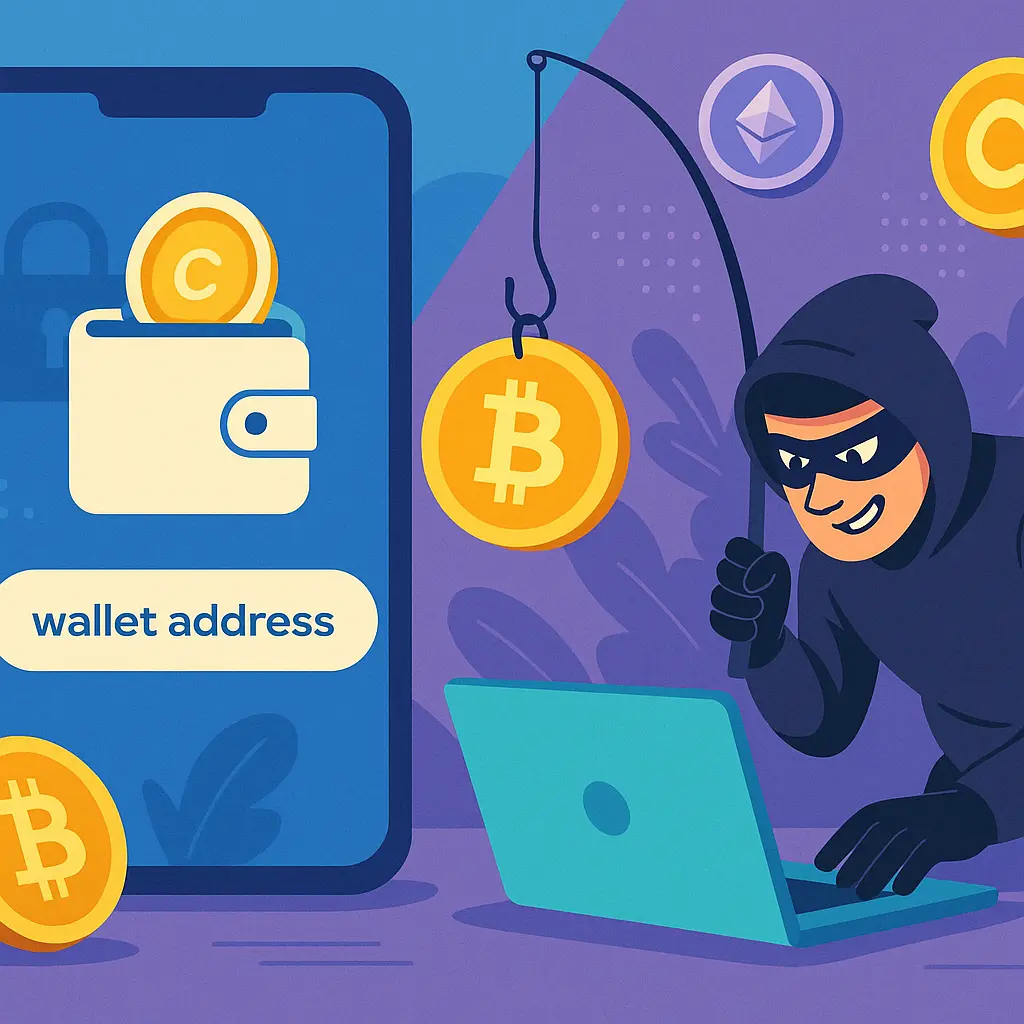
The same logic applies to your personal setup today. When you connect a hot wallet to a decentralized app, you expose that wallet to the app's weaknesses. If a website you connected to gets hacked later, an attacker could drain the connected wallet even while you are away from your device. The more sites one wallet touches, the bigger its attack surface grows.
A single wallet is also a privacy problem. Blockchains are public. If every transaction you have ever made flows through one address, anyone can trace your full history and total balance. That is a roadmap of your finances drawn for anyone who wants to look, including scammers picking targets.
Multiple wallets fix all three problems at once. A breach of one wallet does not touch the others. A risky app only sees the small wallet you connected. And your history is split across addresses that are much harder to link together.
Give Each Wallet One Clear Job
Never add a wallet just to have more. Add one because a specific job needs it. These are the common roles:
- Savings wallet. A cold hardware wallet holding your long-term funds. It rarely moves and never connects to apps.
- Daily wallet. A hot wallet with small amounts for regular sending, receiving, and spending.
- Trading wallet. A separate wallet for frequent trades, so busy activity stays away from your savings and your records stay clean.
- Burner wallet. A throwaway wallet loaded with only what you can afford to lose. Use it for new or unverified apps, airdrops, and experiments.
- DeFi or NFT wallet. A wallet dedicated to one protocol or one collection, so a problem in one app cannot reach the rest.
- Business or spending wallet. A wallet that keeps business income separate from personal funds, which makes bookkeeping much easier.
Label every wallet by its job. Most wallet apps let you name accounts. A wallet called "Savings, never connect" is much harder to misuse than one called "Wallet 3".
When Too Many Wallets Becomes the Bigger Risk
More wallets is not always safer. Past a certain point, complexity becomes the threat. Every wallet you add means another seed phrase to write down, another backup to store, and another password to manage. Forget one seed phrase and the funds in that wallet are gone just as surely as if a hacker took them.
Fragmentation is the other trap. If your holdings are scattered across seven wallets with no record of what lives where, you will lose track. Old wallets get forgotten. Small balances get stranded. Tax time becomes a nightmare of missing transactions. And juggling many wallets raises the odds of a simple human error, like sending funds to the wrong address or restoring the wrong seed phrase on a new device.
The fix is a rule: only add a wallet when you can name its job in one sentence, and only after you have a plan for storing its seed phrase. If a wallet has no clear purpose, you do not need it. If you cannot say where its backup will live, you are not ready for it. A tight setup of two or three well-managed wallets beats a sprawling mess of eight every time.
Your Personal Inputs: Risk, Portfolio Size, and Lifestyle
The right number for you depends on three things. Find yourself in this table.
| Your input | Points toward fewer wallets | Points toward more wallets |
|---|---|---|
| Portfolio size | A small amount in one or two coins fits in one non-custodial wallet | A larger portfolio justifies splitting savings from active funds so one breach cannot take it all |
| Risk tolerance for self-custody | If managing several seed phrases sounds stressful, keep the setup simple | If you are organized and comfortable with backups, more separation adds safety |
| Activity level | Occasional buying and holding needs little separation | Trading, DeFi, NFTs, or business use each earn their own wallet |
| Privacy needs | Low concern means one address history is fine | Splitting activity across wallets makes your full history much harder to trace |
| Time and attention | Little time to audit means fewer wallets you can actually watch | Regular check-ins make a larger setup safe to run |
Be honest with the last row. A five-wallet setup that you never review is worse than a two-wallet setup you check every month. Your number should match the attention you can really give it.
A Step-by-Step Path From One Wallet to Several
Do not build the whole system on day one. Grow it in steps, and prove each step before taking the next.
- Start with one solid non-custodial wallet. Download it only from the official source. Learn where the private keys live and what the seed phrase does. Send and receive a small test amount.
- Back up the seed phrase on paper. Write it down and store it in a secure physical place like a safe. Never save it in a photo, a text file, or cloud storage.
- Practice recovery before adding anything. Restore your wallet from the seed phrase and confirm you can get back in. If you cannot recover one wallet reliably, adding more wallets multiplies your risk instead of reducing it.
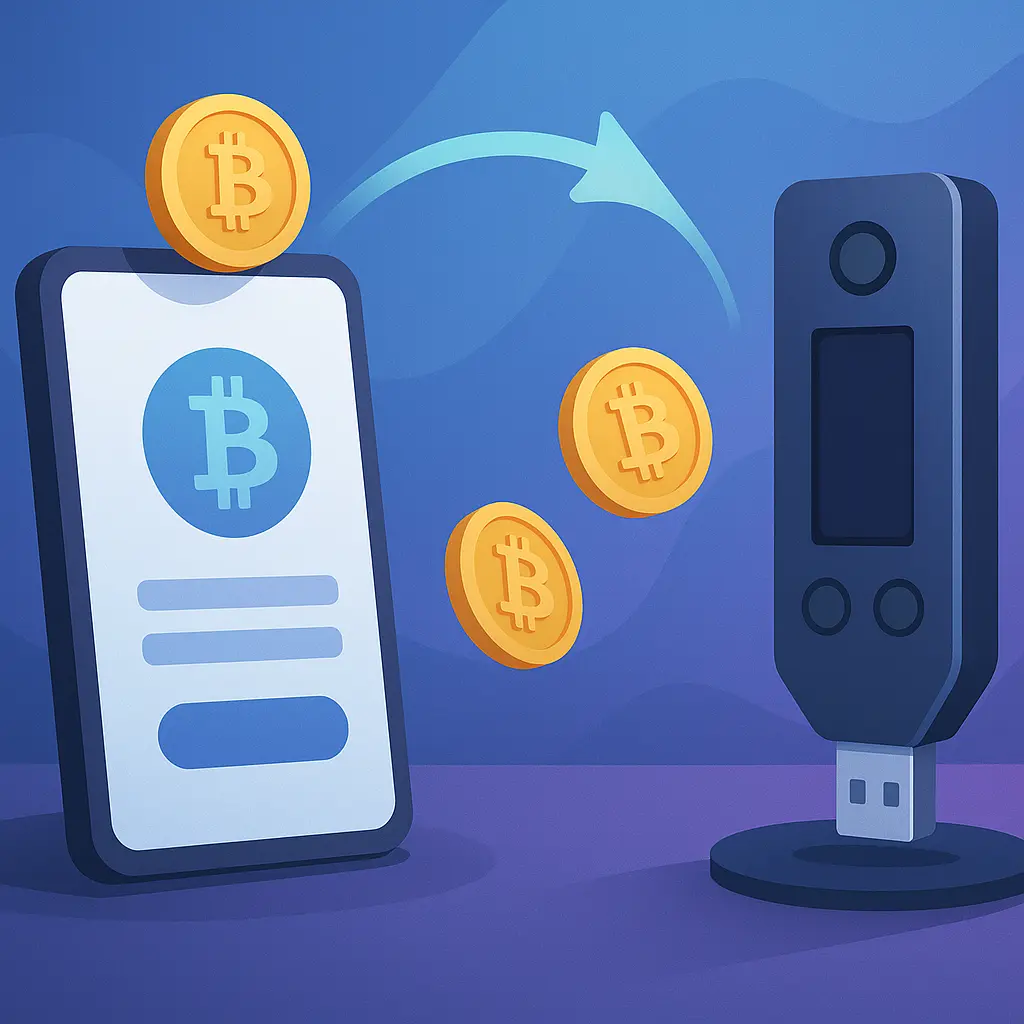
- Add a hardware wallet for savings. When your holdings grow, move the bulk offline. Buy the device new from the maker or an authorized seller, check the tamper seals, and update the firmware right away. Send a small test amount first.
- Add a third wallet only when activity justifies it. A trading wallet if you trade often, or a burner wallet if you explore new apps. Give it a name that states its job.
- Build a wallet map. Write down every wallet you own, its purpose, its addresses, and where its seed phrase backup is stored. Keep this map somewhere safe and private.
- Set operating rules. Decide which wallet may connect to which platforms, how often you audit each one, and what your recovery plan is if a device dies. Then follow the rules.
Do You Need More Than One Hardware Wallet?
One hardware wallet covers most people. But there are four solid reasons to own a second, and most guides skip them:
- Safe recovery. If your only hardware wallet is lost or broken, you still have the seed phrase. But in a panic, many people restore it into a random online wallet, which exposes the seed to whatever that software does. A spare hardware device lets you restore safely on trusted hardware.
- A clone for convenience. You can set up a second device with the same seed phrase as the first. Both devices can then watch and sign the same wallet. Keep one at home in a fixed spot and carry the other. Each device can have its own PIN. The clone doubles as a live backup.
- Splitting coins across seed phrases. If everything sits under one seed phrase, losing that phrase loses everything. Some holders put Bitcoin on one device, Ethereum and its tokens on another, and other coins on a third, each with a different seed. One compromised key then costs only part of the portfolio.
- Teaching someone else. A spare device makes a practical gift for a family member who is learning self-custody, and it helps them start with good habits.
One caution applies to all of these. Every extra seed phrase is an extra backup to protect. A second device with the same seed adds safety without adding a new phrase. A second device with a new seed adds separation but also adds one more thing you must never lose.
Tracking and Taxes Across Multiple Wallets
Splitting funds across wallets does not split your tax duties. Reporting obligations follow your activity, not your wallet count. Moving crypto between your own wallets is not a sale, but you still need records of every move so your history adds up. Here is how to stay on top of it:
- Keep a master inventory. List every wallet address, its type, its job, where the backup lives, and when you last accessed it. Update it whenever anything changes.
- Log every movement of funds. Record deposits, withdrawals, swaps, and conversions with dates, amounts, fees, and who was on the other side. Transfers between your own wallets need records too, or the gaps will look like missing money later.
- Use a portfolio tracker. Tracking tools can pull balances and transactions from all your wallets into one view, with alerts and performance summaries. This turns five scattered wallets back into one clear picture.
- Use crypto tax software. These tools import transaction histories from your wallets and exchanges, calculate gains and losses, and generate reports for filing.
- Separate wallets actually help here. A dedicated trading wallet and a dedicated business wallet keep records clean by design, since each wallet's history maps to one activity.
- Get professional help for complex cases. If your portfolio is complicated or the rules in your country are unclear, talk to a tax professional who knows crypto.
How to Safely Retire or Replace a Wallet
Wallets do not last forever. Devices age, software gets abandoned, and setups outgrow their old parts. When it is time to retire a wallet, do it properly:
- Move everything out first. Transfer all assets to your new or remaining wallet. Send a small test amount before moving the full balance.
- Verify on the blockchain. Confirm every transfer arrived at the right address before you touch anything else.
- Wipe hardware devices. Perform a factory reset on a retired hardware wallet so the keys no longer live on it.
- Destroy the old seed phrase. Physically destroy any written copies of the retired wallet's recovery phrase. A seed phrase for an empty wallet is still dangerous if the wallet ever receives funds again.
- Delete software cleanly. For a software wallet, uninstall the app and delete related files and backups from every device.
- Update your wallet map. Note the date you retired the wallet and why. Keep the old address in your records, since your past transactions there still matter for taxes.
Never sell or give away a used hardware wallet without a full factory reset, and never buy one second-hand yourself. A pre-owned device could carry a seed phrase the seller already knows.
Shared, Team, and Inherited Wallet Access
Sooner or later, someone besides you may need access to your crypto. A business partner, a spouse, or your heirs. Sharing a seed phrase is the wrong answer. Anyone who has the phrase has full control, forever, and you cannot take it back.
Multi-signature wallets
A multi-signature wallet is the right tool for shared access. It requires approval from more than one person before any transaction goes through. For example, a wallet can be set so that two out of three keyholders must sign every transfer. Tools like Gnosis Safe offer this, along with role-based access controls and activity logs so a team can see who did what. Teams using shared wallets should also write down clear access policies and test their recovery procedures regularly, not just once at setup.
Planning for inheritance
Non-custodial crypto has no forgot-password button and no bank to call. If you die and nobody can find your seed phrases, the funds are lost for good. Your wallet map is the foundation of the fix. It lists every wallet, its purpose, and where each backup is stored. Keep that map, along with instructions a non-technical person can follow, in a secure physical location such as a safe or a safe deposit box. Make sure a trusted person knows the document exists and how to reach it when needed. A multi-signature setup can also help here, since keys can be split among family members so no single person holds full control while you are alive. Whatever you choose, test it. A plan that has never been walked through is just a hope.
Security Rules for Every Wallet You Own
However many wallets you end up with, these rules apply to each one:
- Write seed phrases on paper and store them in a secure physical place. Never store them in cloud services, photos, or plain text files.
- Use a strong, unique password for every wallet, kept in a password manager.
- Turn on two-factor authentication everywhere it is offered.
- Download wallet software only from official sources, and verify signatures or hashes when available.
- Buy hardware wallets new from the maker or an authorized seller. Check tamper seals and update firmware right away.
- Never access a wallet on public Wi-Fi or a shared device.
- Send a small test amount before any large transfer.
- Keep wallet software and firmware updated.
- Use a burner wallet for airdrops and unverified apps so your main funds never touch them.
- Audit every wallet regularly. Check balances, review transactions, confirm backups still work, and retire wallets you no longer use.
The two principles behind every rule are the same. Remove single points of failure, and stack layers of protection. Two to three wallets with those habits will serve most people for years.